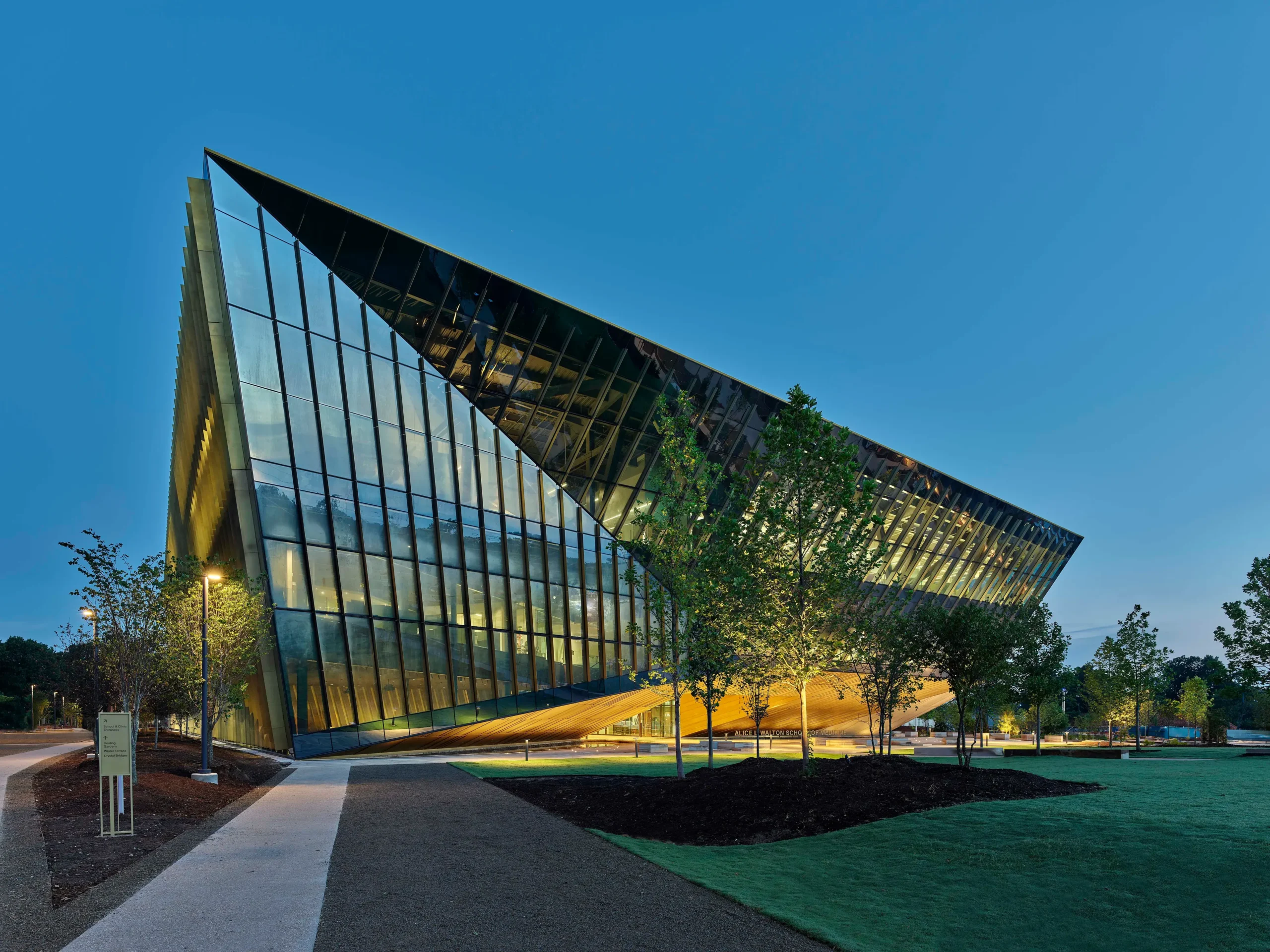
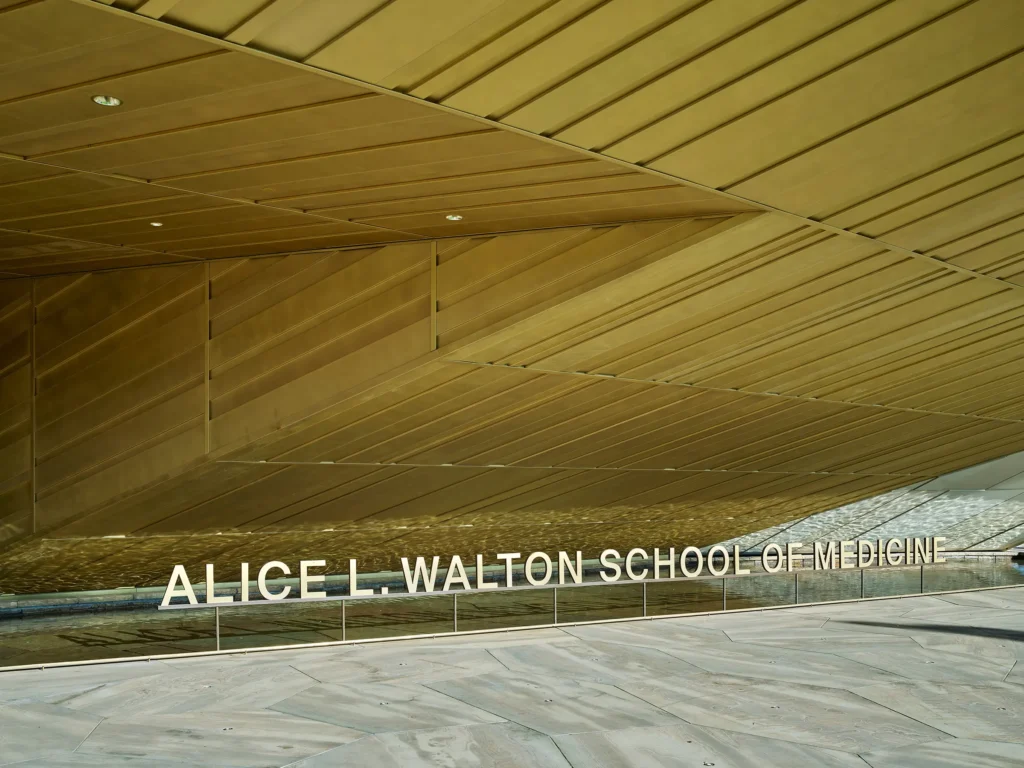
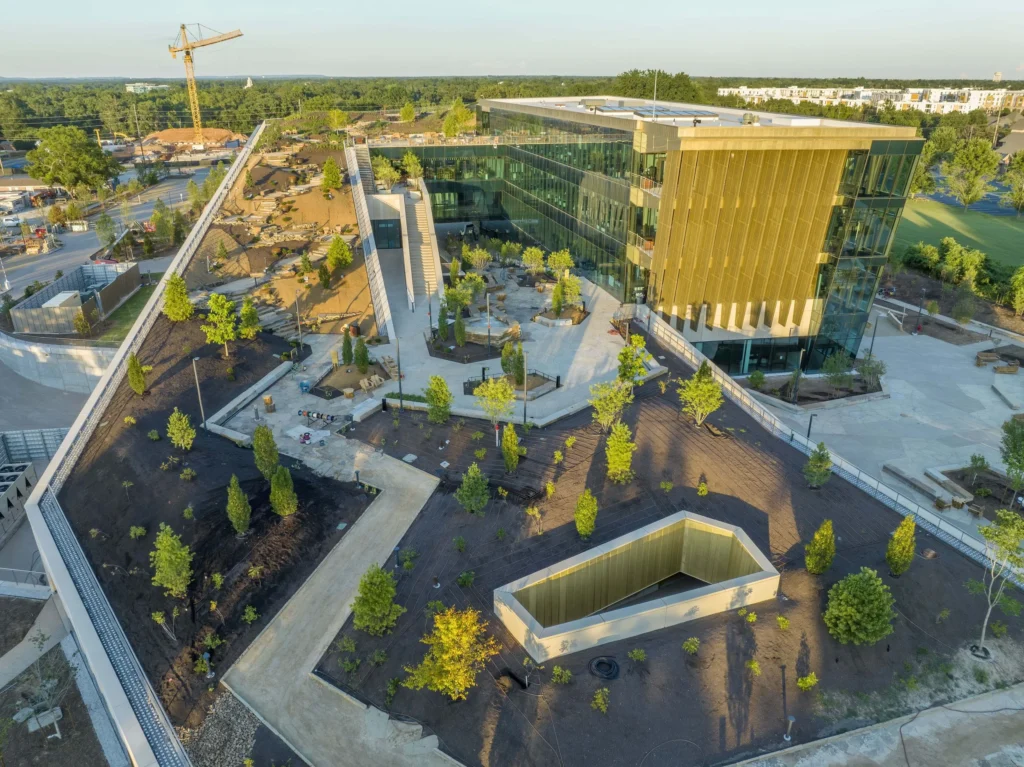
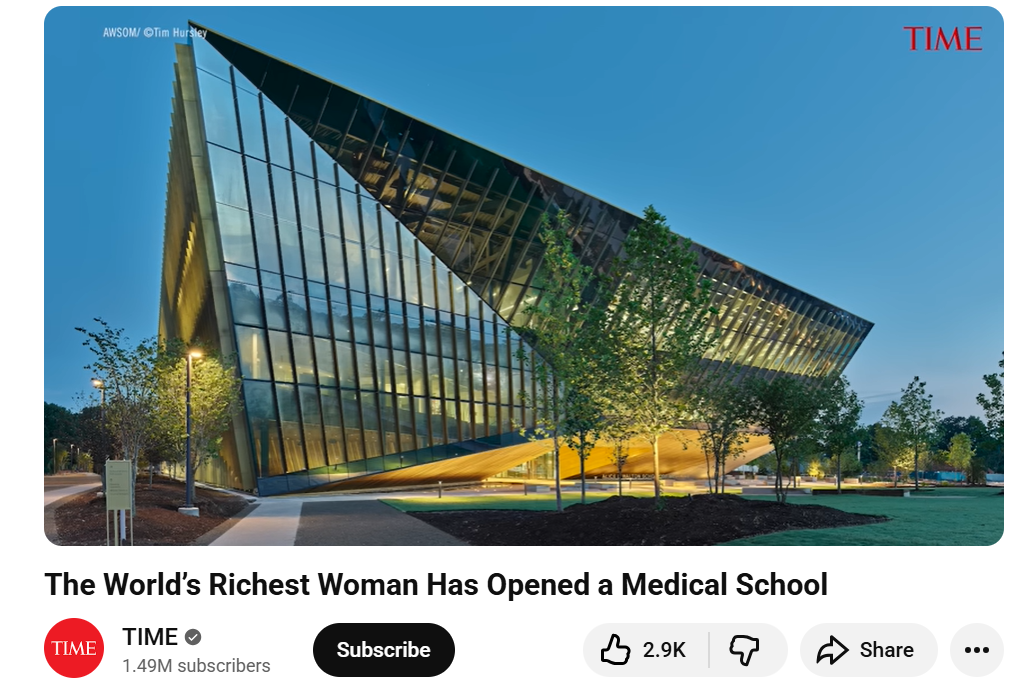
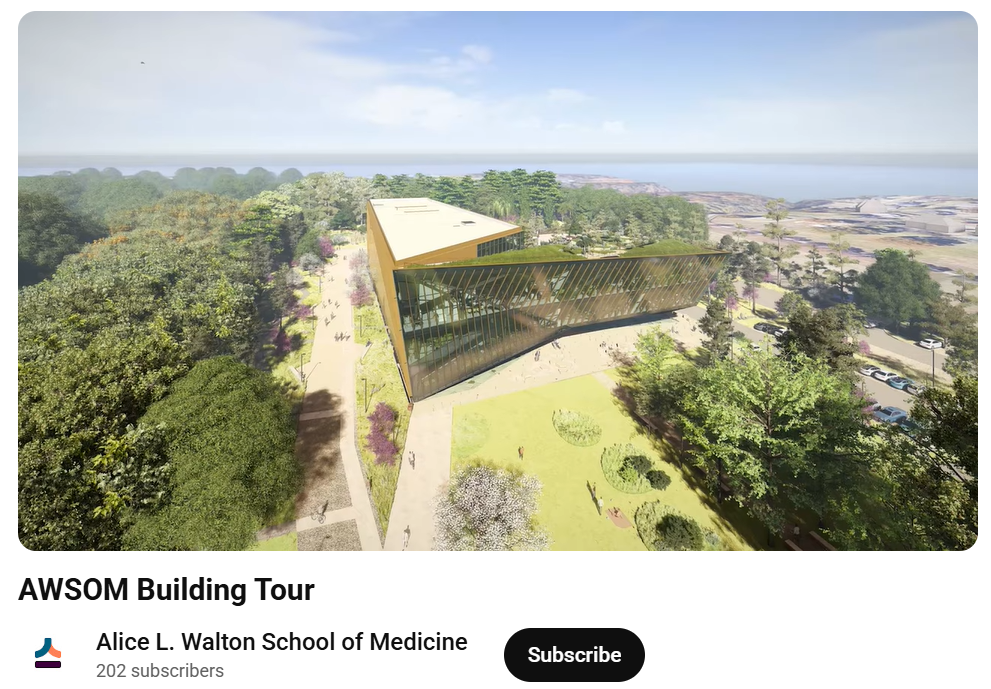
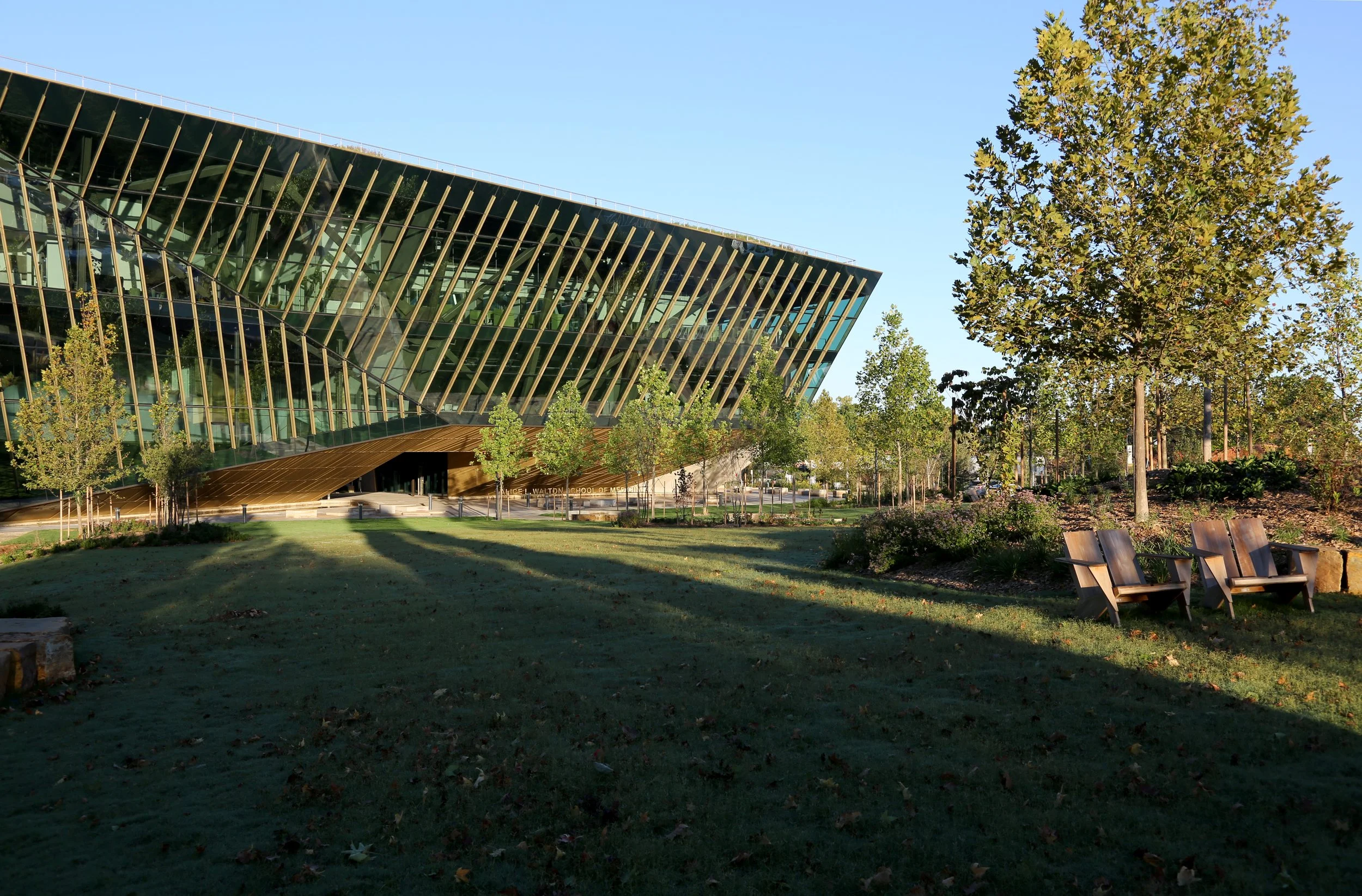
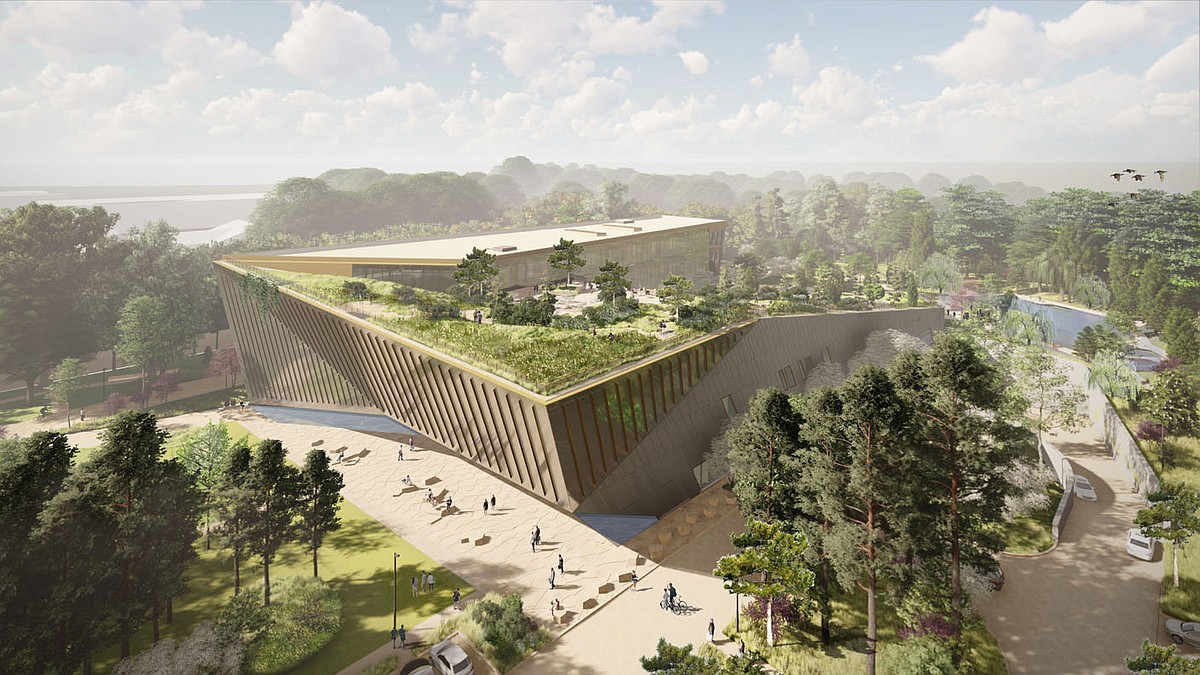
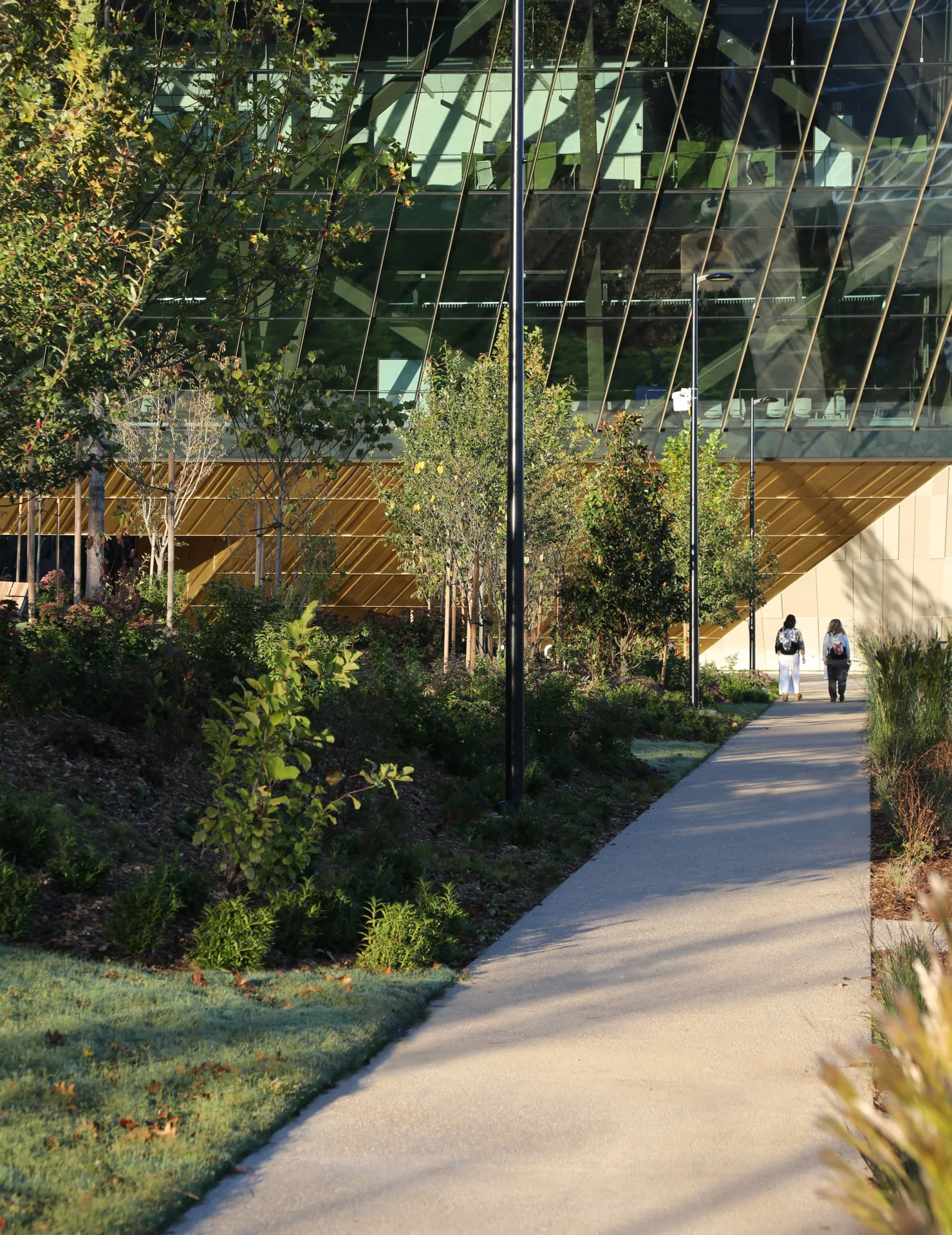
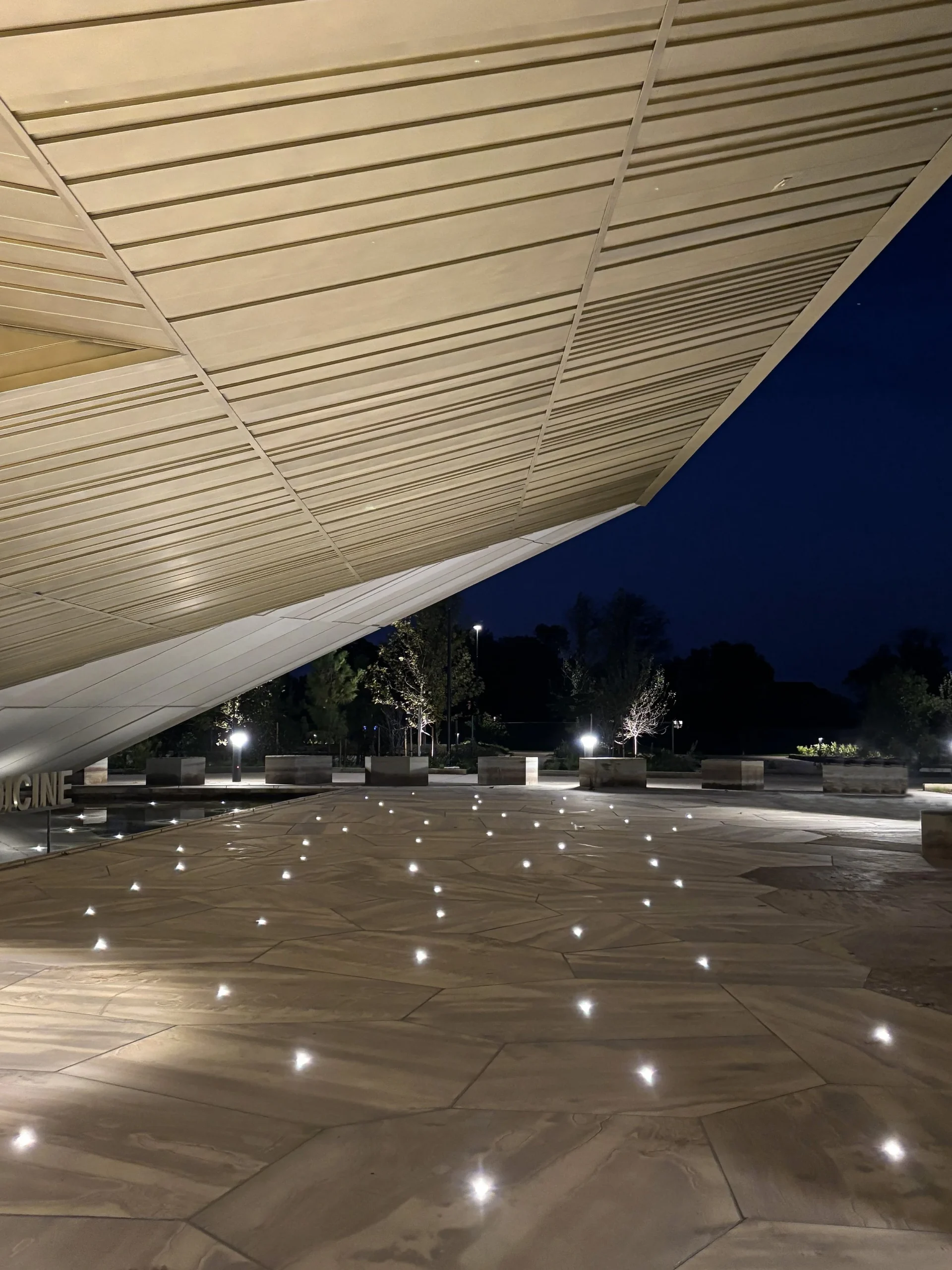
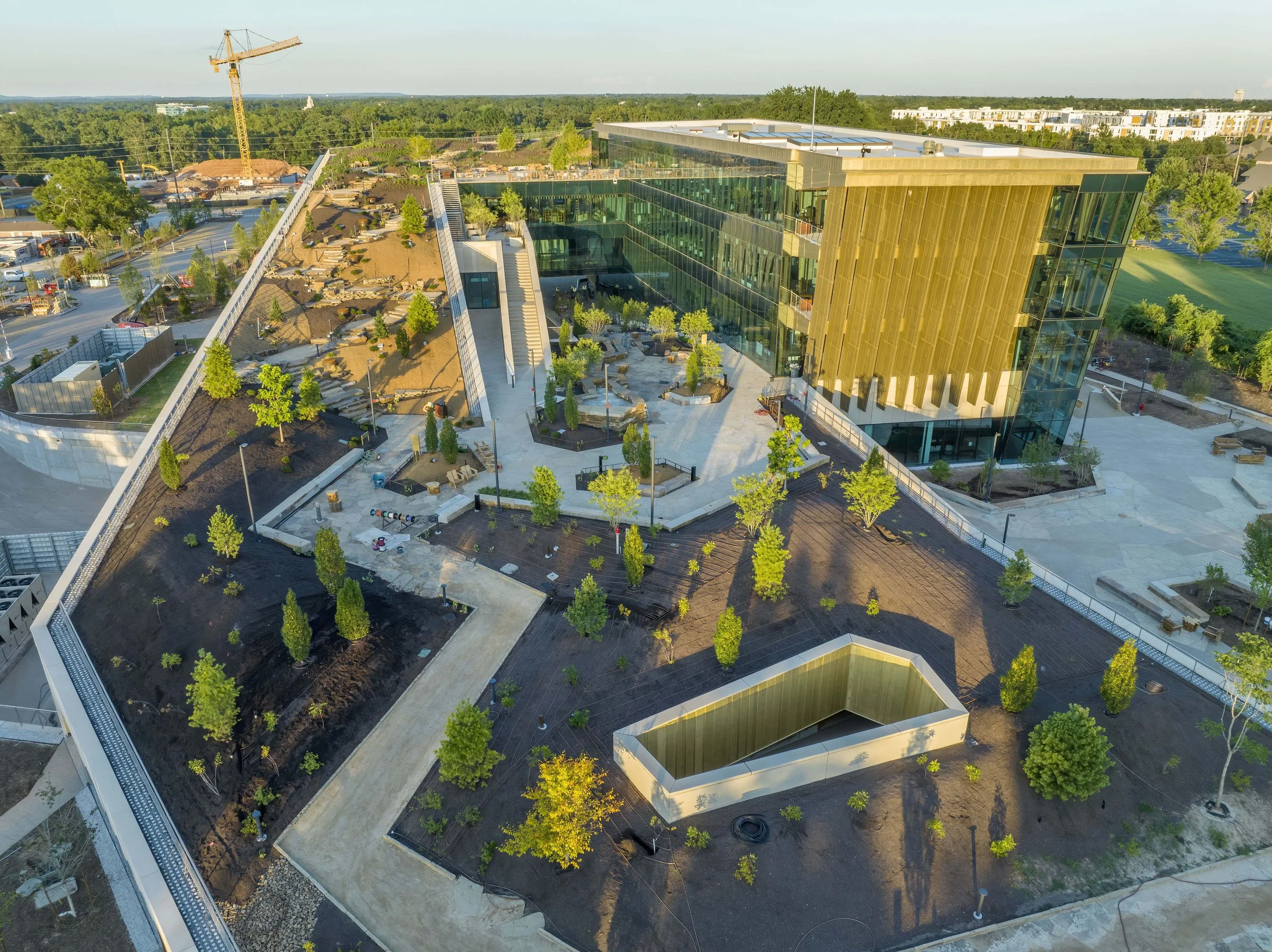
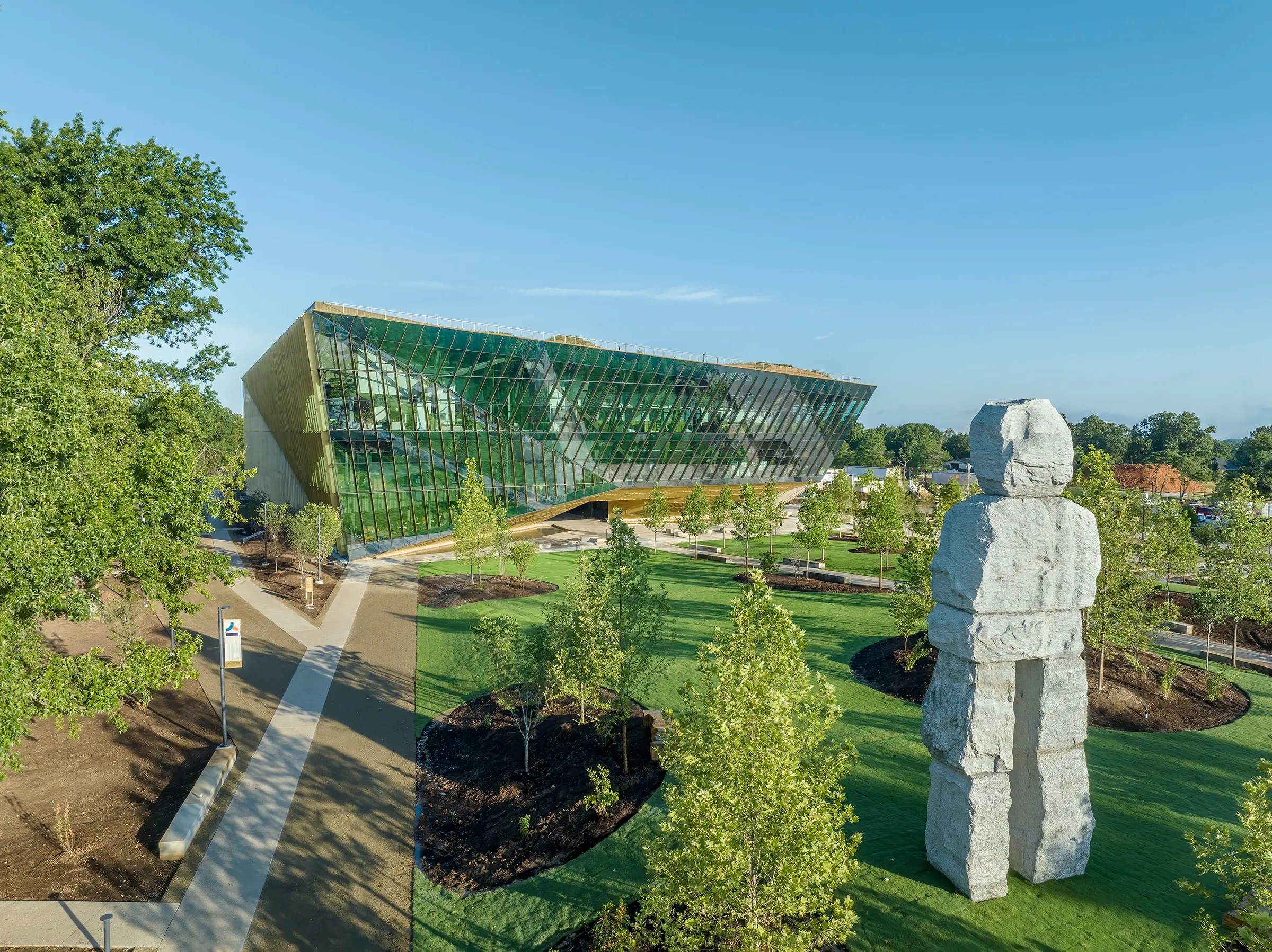
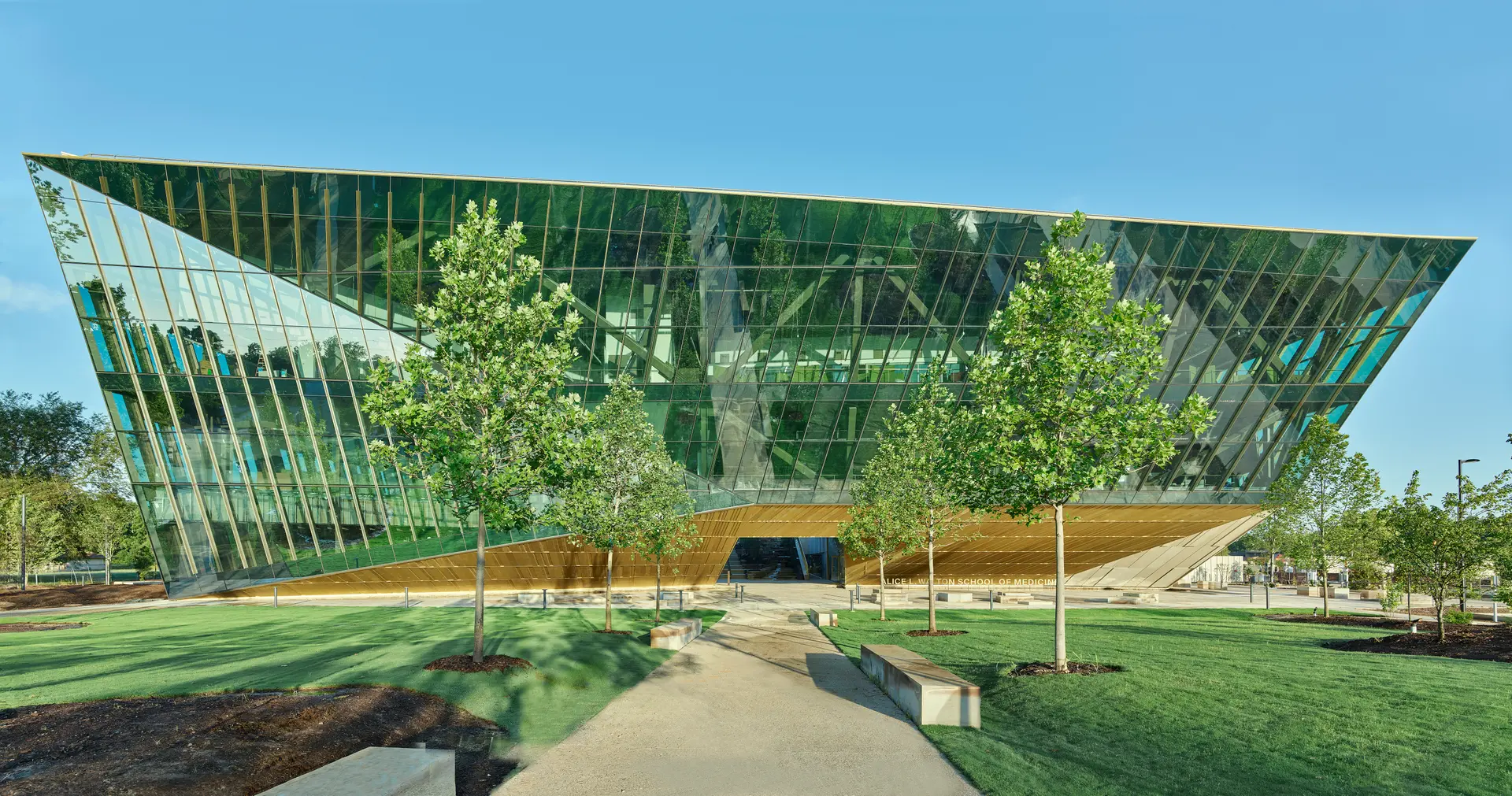
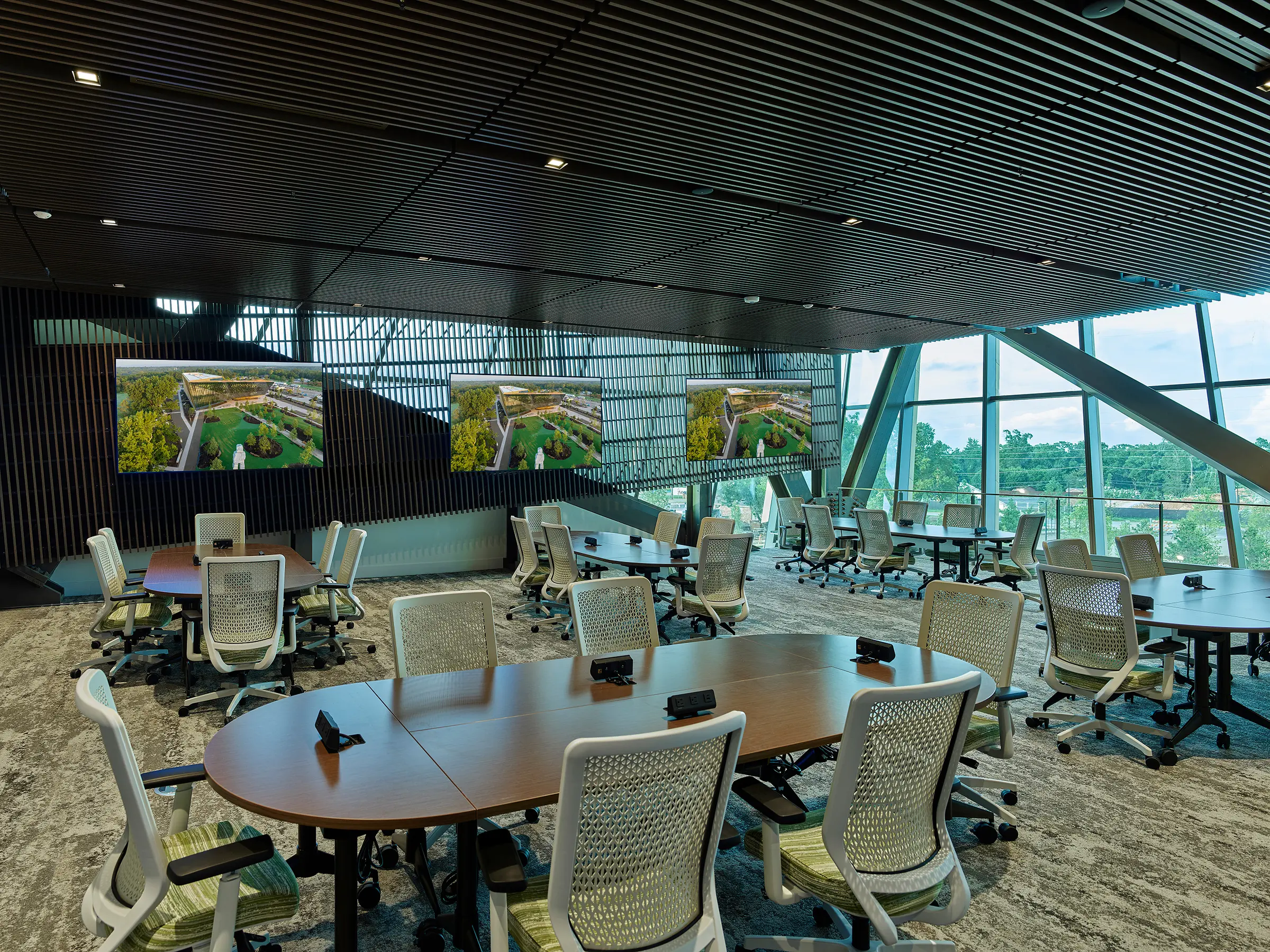
The Alice L. Walton School of Medicine (AWSOM) set out to redefine what a medical campus could be by merging education, wellness, art, and the natural environment into a single, cohesive experience. The building’s expansive glass façade was central to this vision, designed to reflect the surrounding Ozark forest and flood interior spaces with natural light.
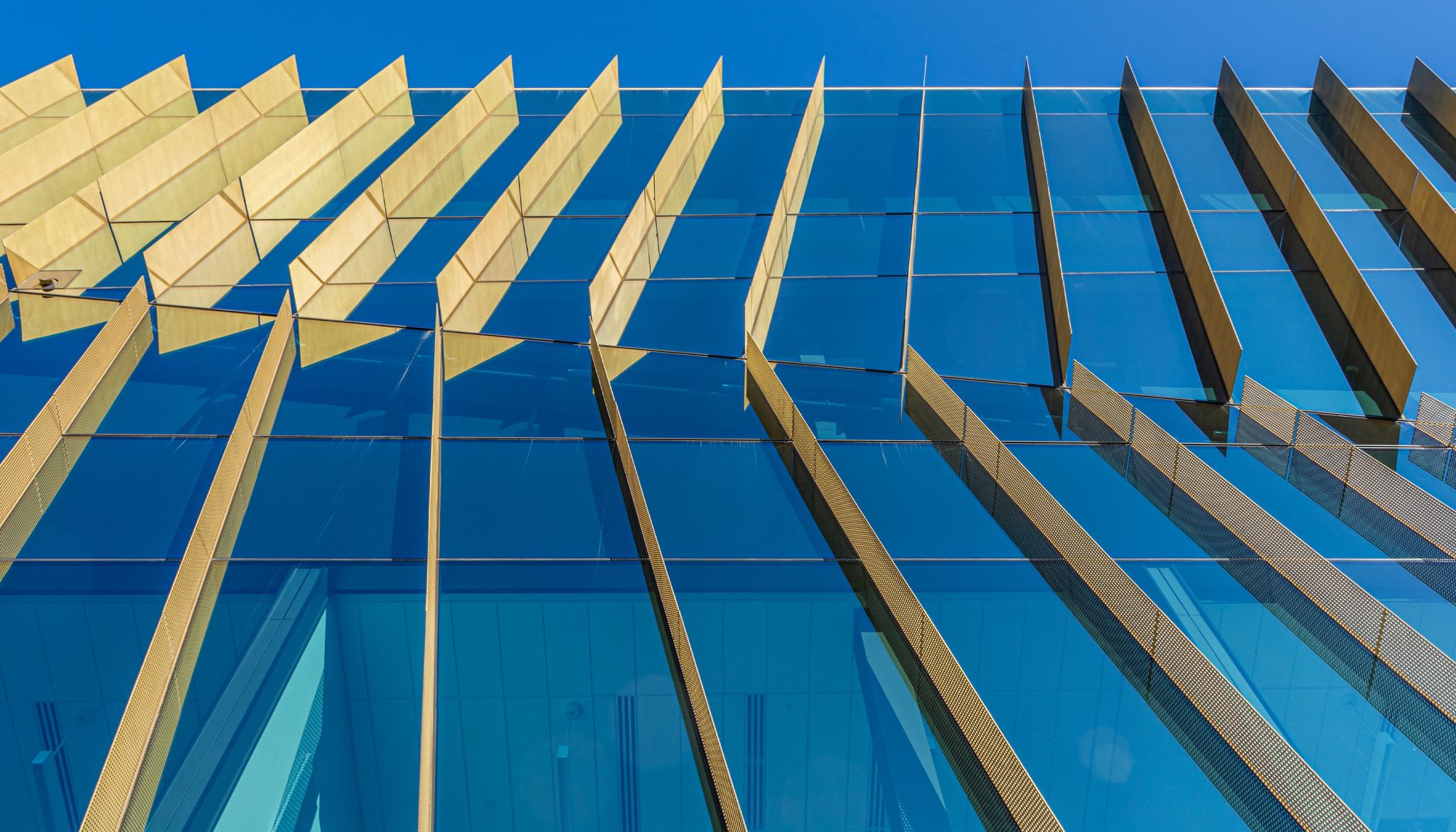
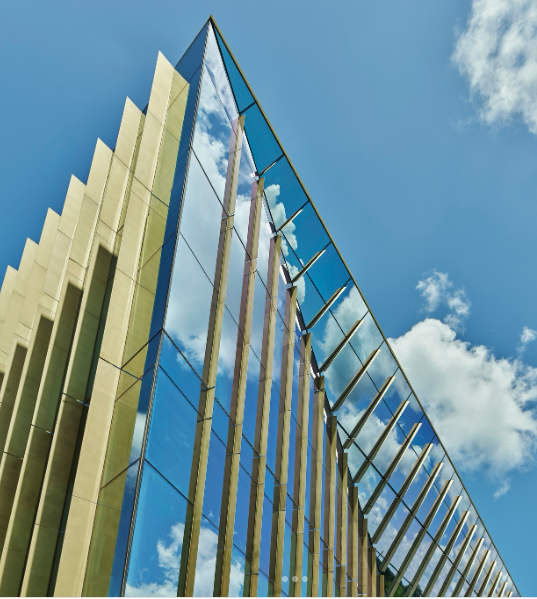
However, this transparency introduced a critical challenge: how to control solar heat gain without compromising daylight, views, or the architectural intent. The design team specified nearly 8,000 square feet of perforated brass sunshades that needed to perform as a functional environmental control while also acting as a defining visual element of the façade.
From a fabrication standpoint, the scope was complex. The project required more than 1,400 individual brass vertical fins in multiple sizes, thicknesses, and perforation configurations. Tight tolerances, consistency across hundreds of pieces, and the inherent challenges of working with brass at this scale demanded a precise and repeatable manufacturing approach.
The Solution: Perforated vertical fins
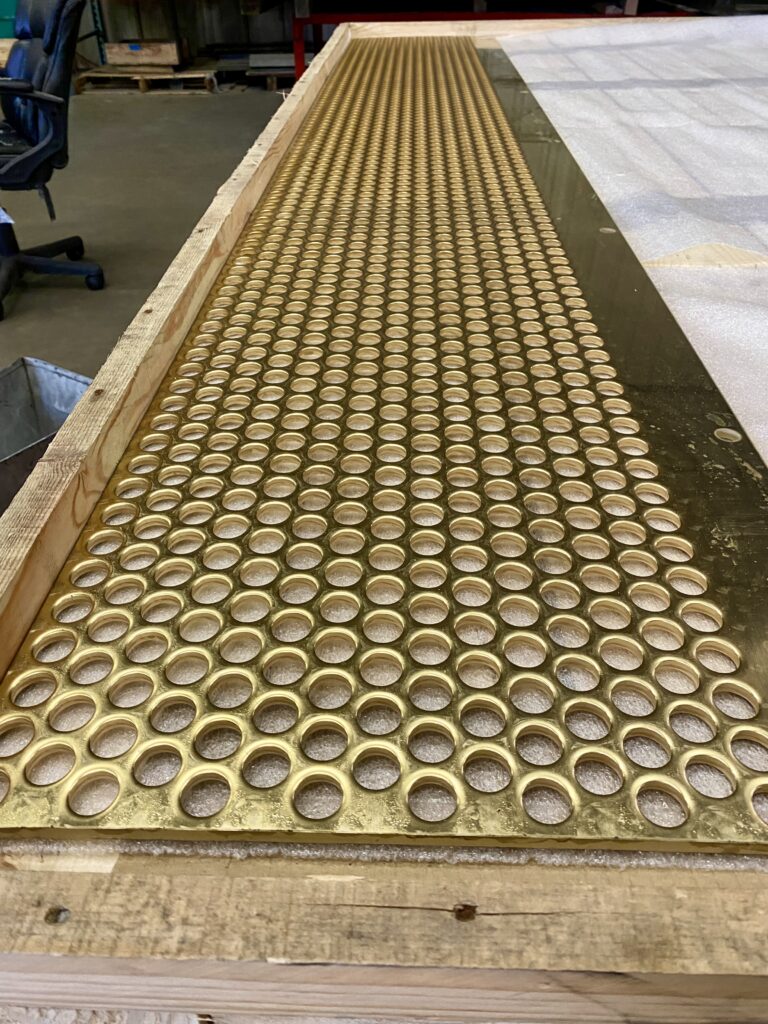
Stellarcraft’s Altair Perforated Panels were specified for the project. Our role was to translate an ambitious architectural concept into a manufacturable and durable system. The primary perforation pattern specified was a 1/4-inch round hole on 3/8-inch staggered centers, providing approximately 40% open area to balance shading and daylight. Due to material thickness constraints in certain applications, we also engineered an alternate pattern 1/4-inch round on 1/2-inch staggered centers, resulting in 23% open area to maintain structural integrity without sacrificing visual consistency.
StellarCraft used primarily punch cutting for the perforated pattern and supplemented waterjet cutting where appropriate. This approach allowed StellarCraft to maintain uniformity across large quantities while minimizing heat distortion and preserving the finish quality of the brass.
The final scope included: 1,408 perforated and solid vertical fins of various sizes. Each piece was carefully produced to align with the façade’s geometry, ensuring seamless installation and a cohesive appearance across the building envelope.
The Result: Beyond education- A holistic Design
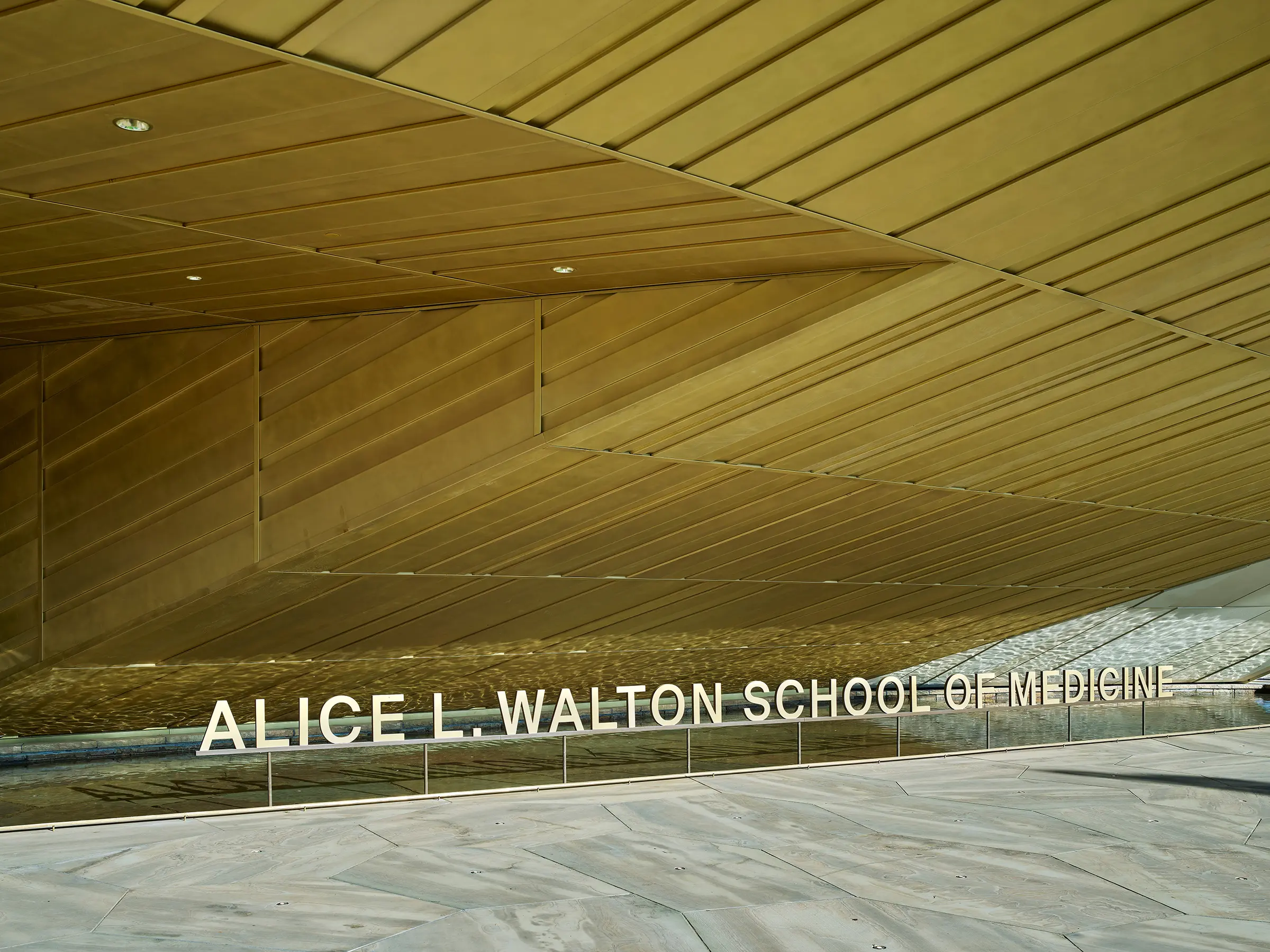
Serving as both a functional feature and a defining design element, the brass sunshade system helps shape the identity of the Alice L. Walton School of Medicine. Perforated brass vertical fins reduce solar heat gain while allowing natural light to filter into the building. This balance improves interior comfort and supports the building’s energy efficiency goals.
Beyond its performance benefits, this system adds warmth and character to the campus environment. Rich brass tones create a natural contrast against the surrounding glass and forested landscape. Through thoughtful material selection, the design reflects the connection between the building, its surroundings, and the region’s unique geology.
The project has received national recognition, including feature coverage in TIME Magazine, highlighting the school’s innovative approach to medical education and campus design. The sunshades contribute to a building that supports Alice Walton’s vision of preventive, whole-person healthcare is one that recognizes the connection between environment, wellness, art, and learning.
For our team, this project exemplifies the value of early collaboration and advanced fabrication techniques in delivering architecturally expressive, high-performance building systems. The AWSOM sunshades stand as a testament to how precision metal fabrication can elevate both form and function in contemporary design.
Check out these links to learn more about AWSOM & StellarCraft's Vertical fins
*** Architectural Photography Credits:Timothy Hursley (courtesy of Alice L. Walton School of Medicine).